

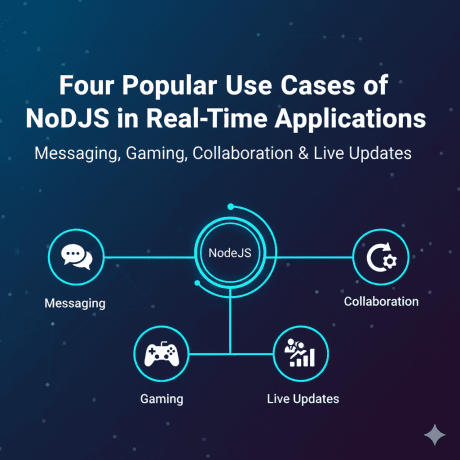
The demand for real-time applications has grown significantly over the past few years. From instant messaging to real-time tracking, businesses are constantly seeking innovative solutions to keep users connected and engaged. One of the most powerful technologies enabling this is NodeJS. Developers often choose it to build real-time applications with NodeJS because of its non-blocking, event-driven architecture that ensures seamless, fast, and scalable performance.
In this blog, we'll explore four popular use cases of NodeJS in real-time applications and why businesses often partner with DevOps consulting services to implement these solutions effectively.
1. Instant Messaging Platforms
When it comes to instant messaging, speed and reliability are non-negotiable. NodeJS makes it easy to manage multiple concurrent connections without latency issues, making it the backbone of modern messaging platforms like WhatsApp and Slack.
The benefits of real-time applications in this case are clear: instant notifications, live typing indicators, and smooth message delivery. Businesses can achieve this by integrating WebSockets with NodeJS to maintain constant communication channels.
2. Collaborative Tools (Google Docs–like Apps)
Real-time collaboration is no longer a luxury but a necessity for remote and hybrid teams. Tools like Google Docs, Trello, and Figma thrive on the ability for multiple users to edit and view updates simultaneously.
By using NodeJS, developers can build real-time applications with NodeJS that synchronize changes instantly across all connected users. This enables smooth, conflict-free editing and ensures that every team member is always on the same page.
3. Online Gaming Applications
Online gaming relies heavily on instant interactions between players, whether it's multiplayer strategy games, real-time competitions, or shared virtual worlds. NodeJS provides low-latency communication and handles thousands of concurrent players efficiently.
The benefits of real-time applications in gaming are enhanced user engagement, faster load times, and an overall immersive experience. With NodeJS, developers can build scalable gaming servers that deliver smooth gameplay and quick responses.
4. Real-Time Tracking Apps (Logistics, Delivery, Rideshare)
Apps like Uber, DoorDash, and FedEx tracking systems highlight the power of NodeJS in logistics and delivery. These apps rely on constant real-time updates to track drivers, packages, or rides accurately.
NodeJS, with its event-driven nature, ensures that every location update is delivered instantly to the user's app. This results in improved transparency, customer satisfaction, and operational efficiency. Many companies partner with DevOps consulting services to integrate NodeJS-based tracking solutions into their systems for maximum performance.
Final Thoughts
NodeJS has revolutionized the way we build real-time applications with NodeJS across industries. From instant messaging and collaborative tools to gaming and real-time tracking, it enables businesses to create engaging, responsive, and scalable digital experiences.
By leveraging DevOps consulting services, organizations can unlock the full benefits of real-time applications, ensuring seamless integration, high availability, and optimized performance.
If you're looking to enhance your application with real-time capabilities, NodeJS is the technology that will keep your users connected and engaged.